On that occasion, the students had the opportunity to chat with curator Sarah Schleuning, exhibition designer Richard Miltner, and the library staff to hear about the special challenges posed by storing and presenting small ephemeral items such as postcards to the public in a novel and exciting manner. Some of the ideas that had floated around at that time ranged from the digital projection of postcard images in galleries and public spaces; the possibility of creating narrow galleries in which small format postcards would not get lost; creating storage facilities to protect the fragile paper items from windstorm and water damage in a hurricane flood zone; and the pros and cons of employing natural and artificial light down here in sunny South Florida.
Showing posts with label FIU School of Architecture. Show all posts
Friday, April 16, 2010
POSTCARDS FROM THE EDGE
IMAGINING A DAY WHEN THE WOLFSONIAN MIGHT EXPAND ITS WASHINGTON AVENUE BLUEPRINT TO THE SIDE, SCHOOL OF ARCHITECTURE STUDENTS AT FLORIDA INTERNATIONAL UNIVERSITY CREATE DESIGNS FOR A POSTCARD MUSEUM
This Wednesday, Wolfsonian Special Projects Co-ordinator Regina Bailey and I drove out to the Paul L Cejas School of Architecture building on the Modesto Maidique Campus of Florida International University. We had been invited by Claudia Busch to sit in on Design 4, a professional and peer review session where those students were making their final presentations for designs for a postcard museum to occupy the site adjacent to the Wolfsonian. The students and their professors had come to the Wolfsonian library some months earlier with the aim of learning about the special needs and requirements of an institution dedicated exclusively to the preservation, study, and exhibition of the postcard. (See my blog dated Friday, January 8, 2010).
Regina and I were eager to see the projects that the students had come up with for meeting these challenges. Professors Eric Peterson, Elite Kedan, and Erik Sundquist had converted eight classrooms on three floors of the School of Architecture building into studios for the review session. Although we did not have the chance to listen to each and every one of the student presentations, we did have the privilege of listening in on the critiques provided by Jon Stuart, David Rifkind, and other reviewers, and to enter all eight studios to view the design drawings and three dimensional models created by the students. Here is just a small sampling of what we saw.
Wednesday, November 25, 2009
FIU ARCHITECTURE STUDENTS TO CONTEMPLATE A POSTCARD MUSEUM
This Tuesday we had a visit in the library by Claudia Busch, Eric Peterson, and Michelle Cintron from the School of Architecture at Florida International University. Professor Busch and her colleagues will be teaching a class for second year architecture students this coming Spring semester. Students taking this class will be designing plans for a small museum dedicated exclusively to the postcard. With well over 11,000 postcards in our library collection, the professors visited our library to determine some of the important environmental, security, storage, lighting, presentation, visitation, and exhibition concepts that their students ought to be considering in their plans. Some of the topics discussed at the meeting included the types of shelving and storage best suited to housing and facilitating retrieval of such a collection; whether this museum would need to accommodate visits by the general public and large groups of school children; and whether there ought to be a separate section or area with study carrels or offices for visiting researchers or residential scholars. Other considerations brought up by Wolfsonian curator Sarah Schleuning included ideas related to optimal viewing, weighing in on the pluses and minuses of natural and artificial lighting treatments. And, of course, when contemplating a site on South Beach, what ought student architects be thinking in terms of protecting the collection from undue light exposure, flooding, and tropical rain and windstorms.
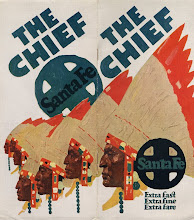
While we have not yet ever mounted an exhibition devoted solely to the postcard, we do regularly integrate them into our public galleries and especially in our own library displays. Because of their relatively small and standard shapes, postcard exhibitions pose some particularly difficult problems for display. To avoid monotonous exhibits, a postcard museum might want to make use of narrow gallery spaces where the items do not get lost. Alternatively, the student architects might want to take advantage of the new technologies of digital capture and projection to create environments where the postcards could be presented to the public virtually in any variety of scales and sizes. Whatever choices these students ultimately make, we can be sure that a visit to the Wolfsonian’s facility and collection will serve to inspire them with the postcards' possibilities. Here are just a few of the postcards that these professors had a chance to see.
Subscribe to:
Comments (Atom)