Friday, April 23, 2010

TAKE FIVE -- PART ONE OF FIVE!

REFLECTIONS ON THE SPIRIT OF GIVING & THE LAST FIVE YEARS OF LIBRARY GIFTS

In commemoration of our fifteenth anniversary, Wolfsonian curator Sarah Schleuning organized an exhibition showing off some of the many gifts that have come into the collection since our tenth-year celebrations in 2005. The exhibit, entitled +5: Recent Acquisitions from The Wolfsonian Collection, officially opened with a members preview and opening reception last evening. As I milled about the lobby mingling with some of the donors, staff, and other guests, I got to thinking about what motivates collectors (and the public) to turn cherished private possessions over to a public institution—the topic of today’s blog. Rather than include items already on display, I thought I would use this occasion to highlight some works that didn’t make it into the show given the limited space in the galleries, the large number of contributors, and the sheer number and volume of items that have been added to the collection. Of course it is equally impossible to recognize in a short blog all of the persons who have contributed to the library over the last five years, so this will be the first of five such blogs dedicated to acknowledging some of those who have contributed either gifts, money for acquisitions, or time, work, and energy in support of the museum library.

In the course of my twenty-plus years working at the Wolfsonian—(beginning some five years before the private foundation and collection was transformed into a public institution)—I have had the privilege of working and conversing with the museum’s visionary founder, Mitchell Wolfson, Jr.—or Micky, as he is more commonly known. Having traveled with Mr. Wolfson to various book fairs and flea markets, it became obvious that Micky was not motivated by any sort of hoarding instinct. Rather, he always seemed to take more pleasure in the hunt than in the capture, and in knowing that he was preserving rather than consuming forgotten treasures. The Wolfsonian first opened its doors as a public institution on the eleventh hour of the eleventh day of the eleventh month in 1995, and in July 1997, Mr. Wolfson donated the museum building and its contents to the state of Florida and specifically to Florida International University. But Micky's mania for collecting (and donating) did not end there. Micky has continued to travel the world collecting (and preserving) things, often in consultation with the curators and librarians with the aim of filling in gaps in the collection.

HIGHLIGHTS OF A GIFT OF MITCHELL WOLFSON, JR.
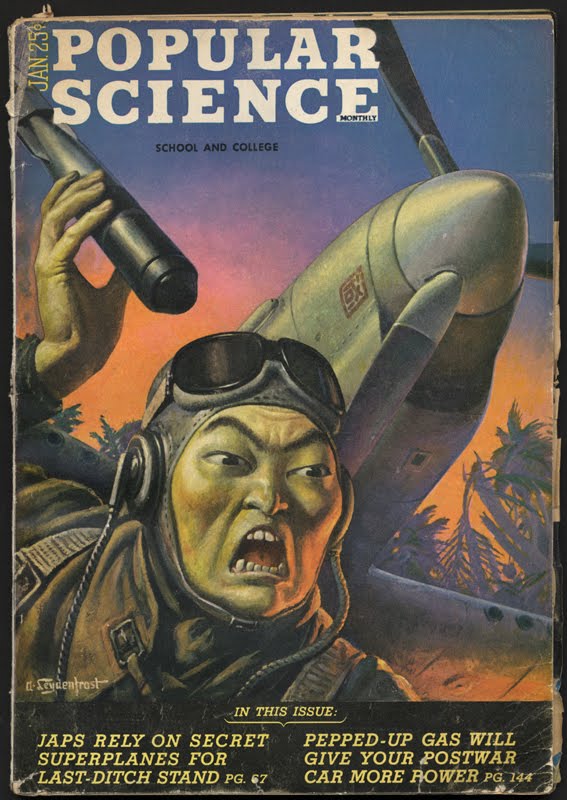
But while the museum has continued to benefit from our founder’s continued generosity, the +5 exhibition now on display on the seventh floor galleries demonstrates that other important collectors have fully embraced the mission of the institution and have shown their commitment to seeing it grow and prosper. In recognition of our growing reputation as an important repository for wartime propaganda, Leonard A. Lauder donated a large number of American posters and related ephemera from the Second World War.

HIGHLIGHTS OF A GIFT OF LEONARD A. LAUDER

When Pamela K. Harer began hunting for a permanent home for the large collection of children's propaganda books she had amassed in Washington State, she was directed by bookdealer extraordinaire Michael Weintraub to the Wolfsonian as the most appropriate repository. Soon after making contact, Pamela gifted more than one hundred illustrated propaganda books to our rare books and special collections library.
HIGHLIGHTS OF A GIFT OF PAMELA K. HARER


HIGHLIGHTS OF A GIFT OF JEAN S. AND FREDERIC A. SHARF

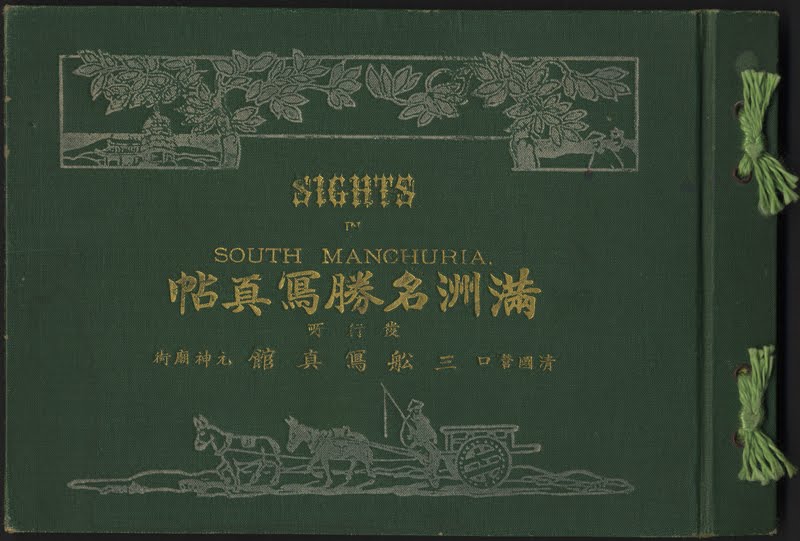
Jean S. and Frederic A. Sharf have been long-time supporters of the museum and most recently have donated a substantial number of large works on paper and rare books to the Wolfsonian with promises that more would be on the way. Over the years, Fred has amassed an incredible collection of view books, original travel journals and diaries, and other rare materials documenting the English and European exploration and colonization of Africa, the Spanish-American War and U.S. expansion in the Caribbean and Philippines, and the rise of the Japanese Empire in the Far East. Not only do his donations dovetail nicely with the Wolfsonian’s collection interests, but they fill a gap in our otherwise strong collection of colonial and empire propaganda.


HIGHLIGHTS OF A GIFT OF JEAN S. AND FREDERIC A. SHARF
TO BE CONTINUED...

Saturday, April 17, 2010

THE BIONIC MAN TO BECOME A REALITY?


Arriving at the Wolfsonian a few hours before he was scheduled to deliver a public talk in the museum’s auditorium entitled: MERGING MAN AND MACHINE, Hugh Herr, the director of the Biomechatronics Group at the MIT, had the chance to pop upstairs and take a peek at a few items culled from the library collection. Mr. Herr, a climbing enthusiast who lost both legs below the knee, works with a group of MIT’s best and brightest on cutting-edge research blurring the lines between science and design aimed at morphing the human body and the machine to produce “smart prostheses.” The research team is exploring the science by which “disabled” persons might not merely be outfitted with prosthetic limbs, but provided with robotic appendages and sophisticated electronic devices that might actually permit them to far exceed the capabilities of their own biological limbs. Sound farfetched?! Not for you Six Million Dollar Man fans. Oops! Now I’m really showing my age.

Following a general tour and walk through the back stacks of the rare books library, Mr. Herr had the opportunity to view some of materials created in the wake of the First World War with the aim of rehabilitating severely wounded war veterans. Not surprisingly, Hugh noted that during and immediately after nearly every war and military conflict (with the exception of the Vietnam War), increases in U. S. government funding served to spur on research breakthroughs and design developments in the technology of prosthetic devices. Our own holdings of rare books and ephemera confirms Mr. Herr’s assertion, with a spate of titles on the subject appearing in countries participating in the Great War, such as An Imperial Obligation: Industrial Villages for Partially Disabled Soldiers & Sailors (London: Grant Richards Limited, 1917), The Disabled Soldier (New York: Macmillan Company, 1919), and the German leaflet: Ludendorff-Spende für Kriegbeschädigte! Sammel-liste. [Ludendorff contributions for disabled war veterans! Collection list.]

Of course, the rudimentary prostheses from this period can hardly be compared to the sophisticated devices being designed today, and in the wake of the ghastly mutilations suffered during the First World War, it is hardly surprising that many artists (such as Georg Grosz, 1893-1959) focused instead on the dehumanizing and dystopian aspects of an increasingly mechanized world. The library, for example, holds a powerful German Expressionist piece illustrative of the disillusionment of many post-WWI artists with technologies’ potential to better the human condition. This portfolio of prints, Der Künstliche Mensch [The Artificial Man] by Willi Geisler (1848-1928), contains ten plates providing a scathing indictment against dehumanizing mechanization and transformation of human beings into robotic automatons.

In the late interwar period, as the horrors of the First World War slowly began to fade from public memory, other intellectuals began to consider the benefits of mechanization and robotics in human affairs. Some even contemplated a future in which technological development bettered the lives of ordinary human beings. Mexican author German List Arzubide, for example, wrote a series of stories for children to be broadcast on the radio in the 1930s. In Troka El Podoroso [Troka the Powerful], the robot protagonist champions the labor-saving industrial technologies (washing machines, sewing machines, adding machines, bulldozers, etc.) and transformations (pen and ink to typewriter, stairs to elevator, moonlight to electric bulb, etc.) combining elements of Mexican folklore and mythology with the new mythic hero.

In a similar vein, our public speaker Hugh Herr also focused his attention on the optimistic, life-affirming, and potentially-utopian aspects of the merger of man and machine. It is his hope that the transformative technologies and designs that he and his group are working to develop will indeed help to usher in a world in which handicaps will disappear in the seamless blending of man and machine. In the world that he envisions in the not so very distant future, advances in science and design in the “smart prostheses” technologies will permit human beings to attain newer and ever higher levels of physical (and cognitive) potentiality. Go Cyborgs!

Friday, April 16, 2010

POSTCARDS FROM THE EDGE

IMAGINING A DAY WHEN THE WOLFSONIAN MIGHT EXPAND ITS WASHINGTON AVENUE BLUEPRINT TO THE SIDE, SCHOOL OF ARCHITECTURE STUDENTS AT FLORIDA INTERNATIONAL UNIVERSITY CREATE DESIGNS FOR A POSTCARD MUSEUM


This Wednesday, Wolfsonian Special Projects Co-ordinator Regina Bailey and I drove out to the Paul L Cejas School of Architecture building on the Modesto Maidique Campus of Florida International University. We had been invited by Claudia Busch to sit in on Design 4, a professional and peer review session where those students were making their final presentations for designs for a postcard museum to occupy the site adjacent to the Wolfsonian. The students and their professors had come to the Wolfsonian library some months earlier with the aim of learning about the special needs and requirements of an institution dedicated exclusively to the preservation, study, and exhibition of the postcard. (See my blog dated Friday, January 8, 2010).


On that occasion, the students had the opportunity to chat with curator Sarah Schleuning, exhibition designer Richard Miltner, and the library staff to hear about the special challenges posed by storing and presenting small ephemeral items such as postcards to the public in a novel and exciting manner. Some of the ideas that had floated around at that time ranged from the digital projection of postcard images in galleries and public spaces; the possibility of creating narrow galleries in which small format postcards would not get lost; creating storage facilities to protect the fragile paper items from windstorm and water damage in a hurricane flood zone; and the pros and cons of employing natural and artificial light down here in sunny South Florida.

Regina and I were eager to see the projects that the students had come up with for meeting these challenges. Professors Eric Peterson, Elite Kedan, and Erik Sundquist had converted eight classrooms on three floors of the School of Architecture building into studios for the review session. Although we did not have the chance to listen to each and every one of the student presentations, we did have the privilege of listening in on the critiques provided by Jon Stuart, David Rifkind, and other reviewers, and to enter all eight studios to view the design drawings and three dimensional models created by the students. Here is just a small sampling of what we saw.