REFLECTIONS ON THE SPIRIT OF GIVING AND THE LAST FIVE YEARS OF LIBRARY
DONATIONS
After taking notice of some of the many generous donations of large collections and “big ticket” items, I thought in this final installment that I would acknowledge some of the smaller, individual gifts to the library collection made by Wolfsonian staff and the Florida International University academic community. Although there had always been a natural synergy between FIU faculty and students and our research center, the relationship really blossomed following the incorporation of the museum into the state university system in July 1997. As more FIU administrators, professors, and students toured the galleries, scheduled research appointments, and organized class visits to the museum and became more familiar with our general holdings and specific strengths, some of our FIU colleagues began to send a few items our way. Several FIU professors have applied to and received residential fellowship grants and many others have scheduled visits to our rare books and special collections library. Some of those visits have not only helped us further document the artifacts in our collection, but have ultimately resulted in the publication of books and scholarly articles that spread the word about our holdings to the wider community of scholars. It is especially gratifying to have professors using our collection and then donating a copy of their published works to our reference holdings.

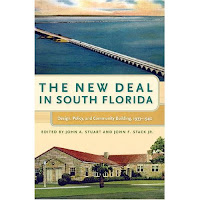
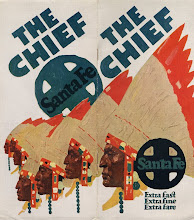
GIFT OF LARA KRIEGEL ; GIFT OF JOHN STUART
Several other members of the FIU family also donated rare materials from their personal collections to the Wofsonian. David Rifkind, who has researched, lectured, and written extensively about Italian rationalist and colonial architecture in the Fascist era, recently donated a couple of original Italian State Tourist Department tickets to our library’s ephemera collection. Steve Sauls (a political and public affairs advisor to FIU’s long-serving president, Modesto Maidique) also recently gifted a few items to our library collection


GIFT OF DAVID RIFKIND ; GIFT OF STEVE SAULS
the collection have even come from FIU students. Although most students are not in the position to make gifts to a museum of high monetary value, that has not stopped a couple of students from finding, buying, and then donating rare ephemeral items of historical value or reference materials to the library collection. After investigating some of the World’s Fair materials in our collection, FIU student Brandon Viani found a historically-significant artifact from the Century of Progress Exposition (Chicago: 1933-34) and donated it to the library. Similarly, Natasha Marie Solis was engaged in research about the Arts & Crafts artist Violet Oakley, and afterwards donated a reference work about the artist that was not in our reference holdings.


GIFT OF BRANDON VIANI
Most persons journeying down the career path of the museum professional are not primarily motivated by monetary compensation or the prospect of fame and glory. More often than not, persons choosing to devote their lives to museum work are committed to the preservation and care of the world’s historical and artistic heritage, and to making that patrimony available to the public. It is therefore a testament to the extraordinary level of commitment to the institution, that many of the persons working at the Wolfsonian have not only devoted time and energy to keeping the museum operating, but that many have also gone the “extra mile” by donating items to the collection.
As so many staffers have donated reference books to help us document the rare items in our collection, I will focus only on the gifts of rare items. As noted in an earlier blog, (Oct. 30, 2009), Silvia Barisioni, the curator at our sister institution, the Wolfsoniana in Genoa, Italy donated a rare World War I period postcard to the collection. After sifting through family memorabilia from the World War Two era, our own Exhibition Designer Richard Miltner found and gifted a number of items to the library collection.


In addition to donating a number of reference works to the library, Special Projects Coordinator, Regina Bailey and her husband Michael Spring also gifted several rare International Studio periodicals over the course of the last couple of years.


Our accountant, Lawrence Wiggins, an avid vintage postcard enthusiast, rummaged through his own collection and gifted a number of duplicates illustrating the Art Deco hotels and buildings on Miami Beach.


GIFT OF H. LAWRENCE WIGGINS III
Digital Library Specialist David Almeida and his wife Gina Wouters donated a large collection of vintage sheet music with extraordinary graphic design cover they had purchased at an estate sale.


GIFT OF DAVID ALMEIDA AND GINA WOUTERS
While organizing an exhibition on automobile design, curatorial assistant Lisa Li noticed that we lacked any promotional materials on the Model-T and decided to find an appropriate item and to donate it with her husband Ricardo Celorio.

GIFT OF LISA LI AND RICARDO CELORIO
After more than twenty years of working at the Wolfsonian, I too have picked up the collecting bug, and have on occasion donated a number of rare items to the collection to help fill in gaps in our otherwise strong holdings of children’s propaganda books; American WWI and WWII postcards; New Deal ephemera; and colonial propaganda.

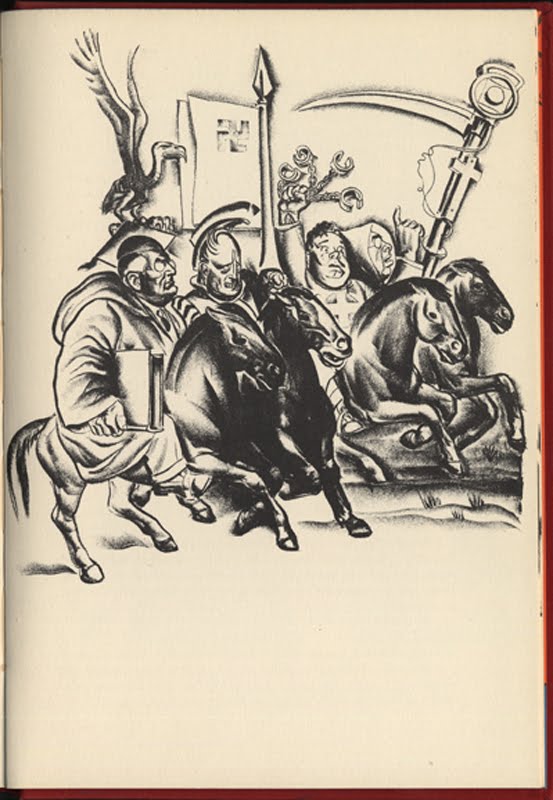


Our former coordinator of Special Arts Projects, Angelika Jung, who has since moved back to her native Austria sent us a family heirloom with historical significance that made it a perfect fit for our library’s research collection. And while visiting in-laws in Germany, our former Associate Librarian, Nicholas Blaga discovered, purchased, and donated to the collection a couple of rare periodicals with beautiful covers by important artists documenting the 1936 Olympic games in Berlin.


GIFT OF ANGELIKA JUNG ; GIFT OF NICHOLAS BLAGA
Our former Membership Coordinator, Naomi Honig and her husband Burton also donated a 1940s era book of cartoons and caricatures. even as our former Art Director, Anthony DiVivo donated a rare children’s book from the 1930s.


GIFT OF NAOMI AND BURTON HONIG

GIFT OF ANTHONY DIVIVO
While serving as Associate Director for Development, Jeffrey G. Fischer donated a number of vintage World War II postcards and other ephemera to the library collection.


GIFT OF JEFFREY G. FISCHER AND MICHAEL SMITH
Leslie Sternlieb, who stepped in as publications word smith and editor of the Journal of Decorative and Propaganda Art, also donated a number of rare books and programs documenting the crowning of Great Britain’s heads of state in the 1930s.


GIFT OF LESLIE STERNLIEB
The spirit of public generosity has not been limited to the donation of rare and reference books, periodicals, and ephemera, however. More than a half-dozen persons have generously donated their time helping the librarians to process, catalog, and conserve the new acquisitions streaming into the museum. Noting that the old self-healing mats in our conservation lab were beginning to decay and fray, Cheryl Price, an FIU student already donating her time creating protective enclosures for some of the rare and fragile works in the collection, donated money as well to fund the purchase of new conservation materials and supplies. Laurence Miller, whose incredible collection I referred to earlier in the blog, was not satisfied solely with gifting his cruise line materials; he has since been coming in three days a week to help us organize, accession, catalog, re-house, and digitize that collection. Another Wolfsonian staffer in the Business department, Armando Suarez has sacrificed his Saturday afternoons to come in and work as a volunteer cataloguer. And a number of young college students and graduates from FIU and the University of Miami, including Miriam Kashem and Al Pena, have also pledged their time this summer to unpaid internships in the library.


VOLUNTEER LIBRARY INTERNS ARMANDO SUAREZ, MIRIAM KASHEM, AND AL PENA
In concluding this series of reflections on the spirit of giving, I thought I would return full-circle to the question of motivation. Perhaps, as the expression goes, giving is its own reward. But then again, maybe the people who give to museums do not do so solely out of a sense of altruism, or because they have a heightened philanthropic spirit. Perhaps they give because they expect to get something of value in return for their donation. For some collectors, the dividend that they might reap beyond a break on their taxes is the knowledge that they have found a permanent home where cherished items will be cared for and preserved for posterity. For others, the reward may be the knowledge that that gift that they so value will now be placed in an institution where others can also share and appreciate its artistic, cultural, or historic significance. For those individuals who volunteer and freely donate their valuable time and energy, perhaps that labor is compensated for with practical work experience that will reap dividends when applying for schooling or careers in the profession. Or perhaps they take pleasure in the opportunity to work with and around a fascinating array of objects that tell us so much about the art, design, history, and culture of another epoch. Who wouldn’t want to spend their free time poring over and contemplating such cool stuff!